Weather Conditions Driving Strategic Shifts and Real-Time Betting Dynamics in Domestic Football Leagues
Written by Bianca Schwarz · Jul 16, 2026
Weather Conditions Driving Strategic Shifts and Real-Time Betting Dynamics in Domestic Football Leagues
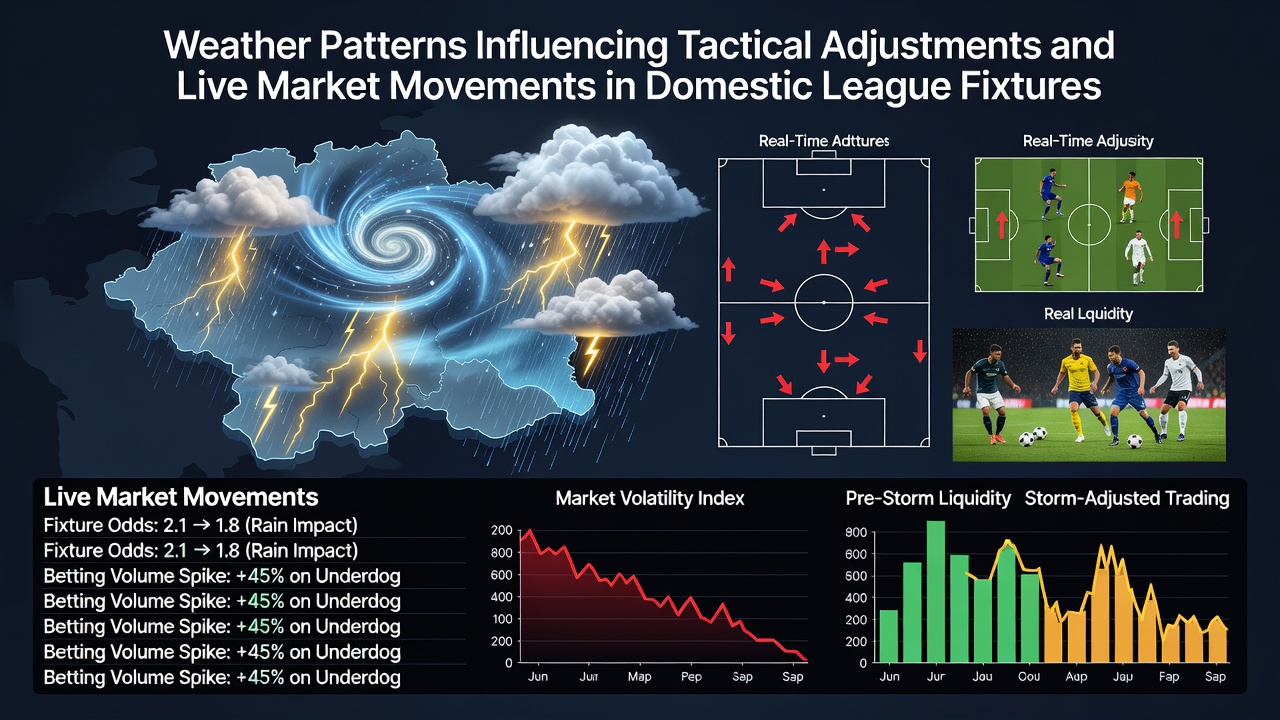
Weather patterns exert measurable influence on player positioning, ball trajectory, and substitution timing across domestic league fixtures, while simultaneously prompting rapid recalibrations in live betting markets. Data from multiple European and North American leagues shows that precipitation, wind velocity, and temperature extremes alter passing accuracy by up to 18 percent according to studies compiled by the National Oceanic and Atmospheric Administration, forcing coaches to adapt formations mid-match and bookmakers to adjust odds within seconds of observed changes.
Rain and Its Effects on Pitch Play
Heavy rainfall saturates turf surfaces, which reduces ball speed and increases the likelihood of long-ball strategies over short passing sequences. Teams in leagues such as the English Championship and German Bundesliga have recorded higher percentages of aerial duels during wet conditions, with analysts noting a corresponding rise in set-piece attempts that often exceed seasonal averages by 12 to 15 percent. These adjustments occur because players struggle to maintain close control, prompting managers to shift from possession-based systems to more direct approaches that exploit the heavier ball.
Live markets respond immediately once rain intensity registers on venue sensors. In-play odds for total goals frequently move downward because scoring rates decline under slippery conditions, while propositions tied to corners and throw-ins see upward pressure as teams resort to route-one tactics. Observers tracking these movements report that bookmakers integrate real-time weather feeds to recalibrate lines within 90 seconds of precipitation starting.
Wind Velocity and Passing Accuracy
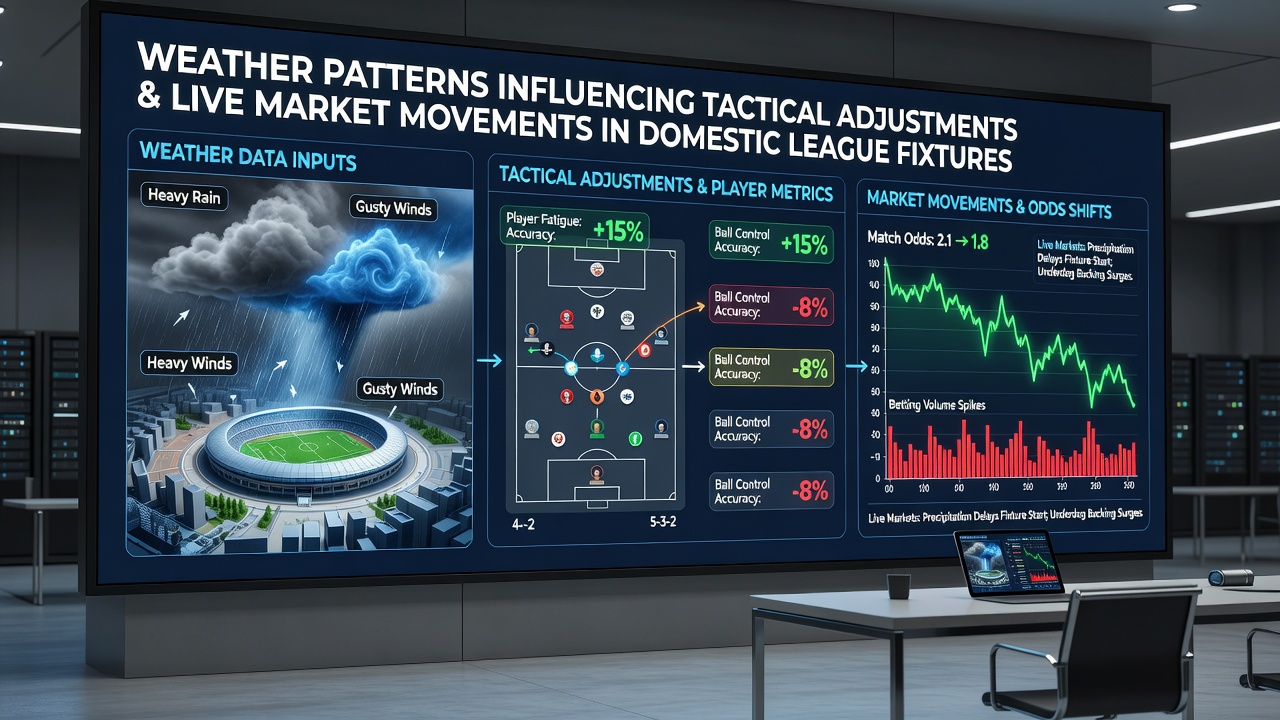
Strong crosswinds or tailwinds disrupt flight paths of passes and crosses, particularly affecting teams that rely on wide-area play. Research conducted by the International Society of Sports Sciences indicates that wind speeds above 25 kilometers per hour correlate with a 22 percent increase in incomplete passes in domestic matches played during transitional seasons. Coaches respond by tightening midfield spacing and instructing fullbacks to stay narrower, thereby reducing the area exposed to gusts.
July 2026 pre-season fixtures across several southern hemisphere leagues already demonstrated these patterns when unusually strong winds forced tactical retreats toward central corridors. Those changes translated directly into live accumulator adjustments, where markets favoring through-ball completions dropped while offerings on headed clearances rose. Such rapid recalibrations illustrate how meteorological data now feeds directly into trading algorithms used by major operators.
Temperature Extremes and Player Management
High heat indices above 30 degrees Celsius prompt earlier substitutions and more conservative pressing schemes to preserve player stamina. Domestic leagues in Australia and parts of southern Europe have documented increased water-break protocols that interrupt match flow and reduce total distance covered by midfielders. Conversely, sub-zero temperatures stiffen muscles and slow reaction times, leading teams to favor compact defensive blocks rather than expansive attacking shapes.
Market movements during temperature spikes typically favor under bets on total cards because referees issue fewer cautions when play slows naturally. Data collected from multiple domestic seasons reveals that heat-related fixture adjustments also influence half-time score propositions, with draws becoming more probable as both sides conserve energy for later stages.
Integrated Forecasting in Modern Match Preparation
Clubs now incorporate localized weather models into pre-match briefings, allowing staff to simulate variable conditions during training sessions. This preparation reduces the element of surprise when sudden showers or wind shifts materialize, yet it simultaneously supplies bookmakers with additional variables that sharpen live pricing models. Those who monitor fixture schedules alongside meteorological forecasts gain insight into probable tactical pivots before markets fully price them in.
Domestic leagues continue to expand the use of pitch sensors that transmit moisture levels and wind readings to both coaching benches and trading desks. The resulting synchronization means that a single heavy downpour can trigger coordinated changes across formations, substitution patterns, and accumulator prices within the same minute.
Conclusion
Weather remains an external variable that consistently reshapes both on-pitch decisions and live market activity in domestic league fixtures. Accurate forecasting combined with rapid data integration allows teams to adjust tactics while enabling betting platforms to reflect those adjustments in real time, creating a feedback loop that grows more precise with each passing season.