Travel Logistics and Performance Dips: Unpacking Patterns in Away Fixture Results for League Previews
Written by Bianca Schwarz · Jul 25, 2026
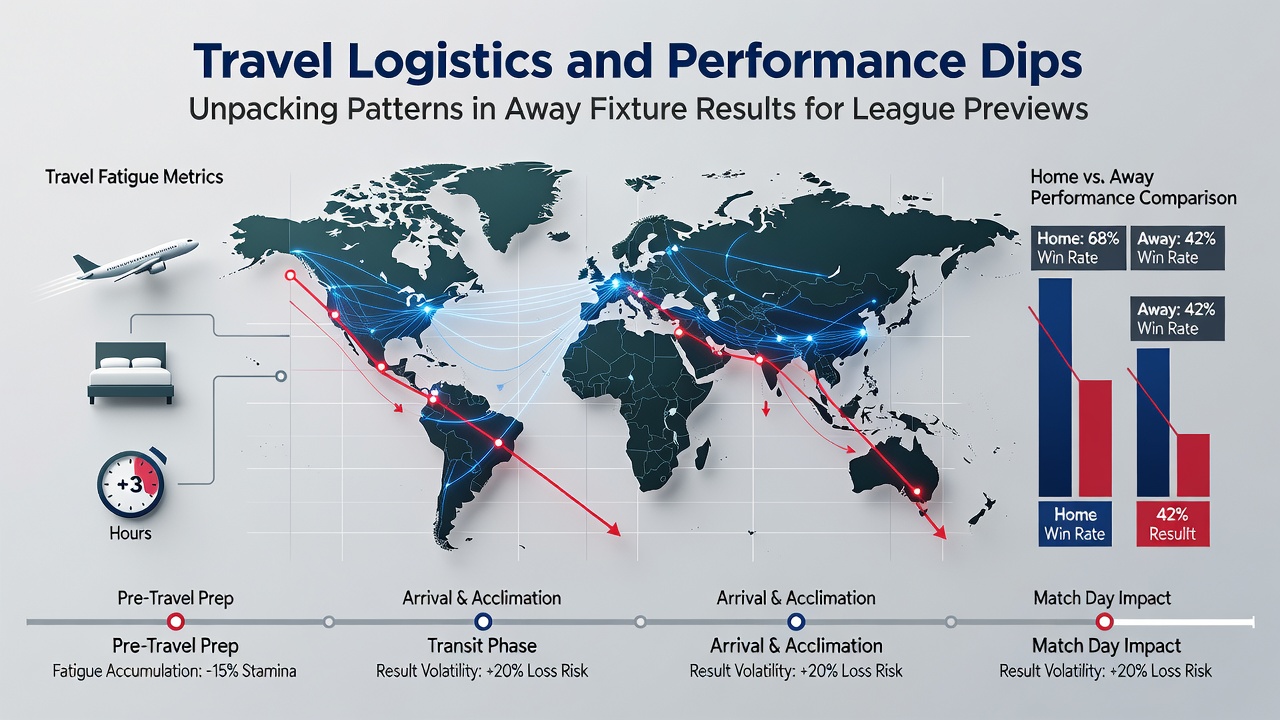
Travel Logistics and Performance Dips: Unpacking Patterns in Away Fixture Results for League Previews
Football leagues across Europe and beyond show consistent patterns where away fixtures produce measurable drops in team output, and analysts preparing previews often trace these shifts back to travel logistics that include distance, mode of transport, and recovery time. Data from multiple domestic competitions indicates that teams covering more than 300 kilometers for a match see their win rates decline by an average of 8 to 12 percent compared with shorter journeys, while longer trips involving overnight stays correlate with further reductions in expected goals and shots on target.
Distance and Recovery Windows Shape Outcomes
Researchers examining Premier League and Championship fixtures between 2020 and 2025 found that clubs traveling by air for distances exceeding 500 kilometers recorded a higher incidence of late-game concessions, and these trends held after controlling for squad rotation and opponent strength. Shorter domestic trips by coach, typically under four hours, produced smaller but still detectable dips, particularly when kickoff followed immediately after a midweek European fixture. Observers note that the time between arrival and match start plays a larger role than raw distance alone, with teams given less than 24 hours to acclimate showing reduced high-intensity running metrics tracked by GPS systems.
League-Specific Travel Patterns
In the Championship, where many clubs rely on road travel even for cross-country matches, performance data reveals elevated draw frequencies when teams cross more than two time zones within the same country, although the effect size remains smaller than in leagues with greater geographic spread. European competitions add another layer because clubs from northern countries face longer flights when visiting southern venues during summer months, and July 2026 schedules already list several early-season fixtures that will test recovery protocols for teams returning from pre-season tours. Analysts compiling previews for the 2026/27 campaign therefore factor in fixture congestion caused by international breaks and continental travel, since these elements compound the baseline away disadvantage.
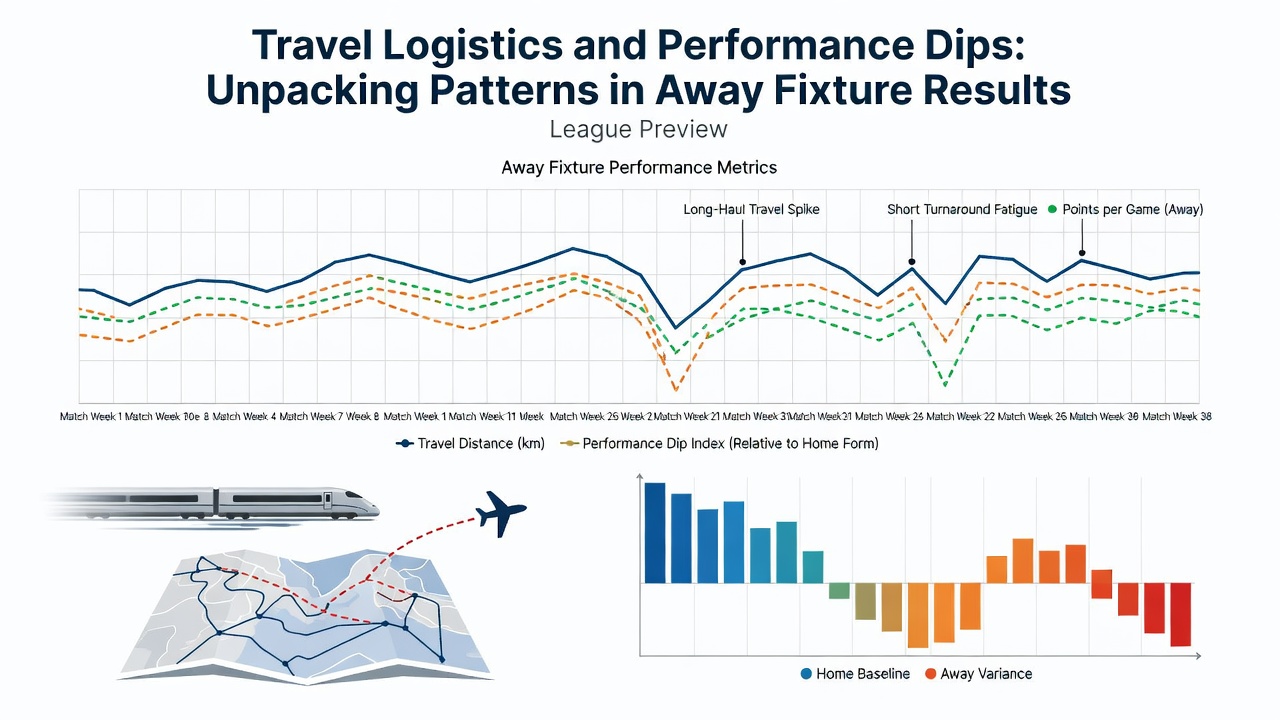
Studies conducted by sports science departments at universities in Germany and Australia have quantified how sleep disruption and altered meal timing affect neuromuscular performance, and the findings align with match statistics showing lower pass completion rates in the first 30 minutes after extended travel. One analysis of Bundesliga away games demonstrated that teams arriving the day before the match maintained possession metrics closer to home levels, whereas same-day arrivals correlated with measurable drops in sprint distance and duel success. These patterns repeat across multiple leagues because the physiological load remains consistent regardless of competition name.
Data Sources Reveal Repeatable Trends
According to reports published by the UEFA technical department, clubs participating in both domestic and European fixtures experience compounded travel effects that surface most clearly in away league matches scheduled within 72 hours of a continental game. Figures from the Australian Institute of Sport, which examined A-League travel, similarly indicate that east-west flights produce larger performance variance than north-south routes of similar length, largely due to circadian rhythm shifts. Preview writers therefore cross-reference historical away results against exact travel itineraries released by clubs in July each year, when pre-season schedules finalize and fixture lists become available.
Coaches adjust training loads and arrival times based on these documented patterns, yet the underlying data continues to show that away performance remains sensitive to even modest increases in journey duration. In leagues with fewer resources for chartered flights, such as parts of the English Football League, the reliance on scheduled services and early morning departures adds further variables that preview models attempt to capture through regression analysis of past seasons.
July 2026 Context and Forward Planning
With the 2026/27 season preparations underway in July 2026, clubs are already publishing detailed travel plans that include contingency routing for potential rail strikes or airspace restrictions, and these announcements provide preview teams with additional data points. Historical records show that teams forced into last-minute schedule changes exhibit slightly larger performance dips than those following original itineraries, although the effect dissipates once the season progresses and squads adapt. Analysts therefore monitor official club statements and transport authority updates to refine expectations for early-season away results.
Conclusion
Patterns linking travel logistics to away fixture outcomes appear consistently across datasets from multiple leagues and continents, adn the relationships hold after accounting for squad depth and fixture density. Preview frameworks that incorporate travel distance, arrival timing, and recovery windows therefore deliver more accurate baseline expectations for match results, while clubs continue to refine their own protocols in response to the same evidence. The interplay between geography and performance remains a measurable factor rather than an unpredictable variable, allowing systematic inclusion in league analysis throughout each campaign.