The Bench Effect: Tactical Switches Altering Odds Movements During Premier and Championship Encounters
Written by Bianca Schwarz · Jun 20, 2026
The Bench Effect: Tactical Switches Altering Odds Movements During Premier and Championship Encounters
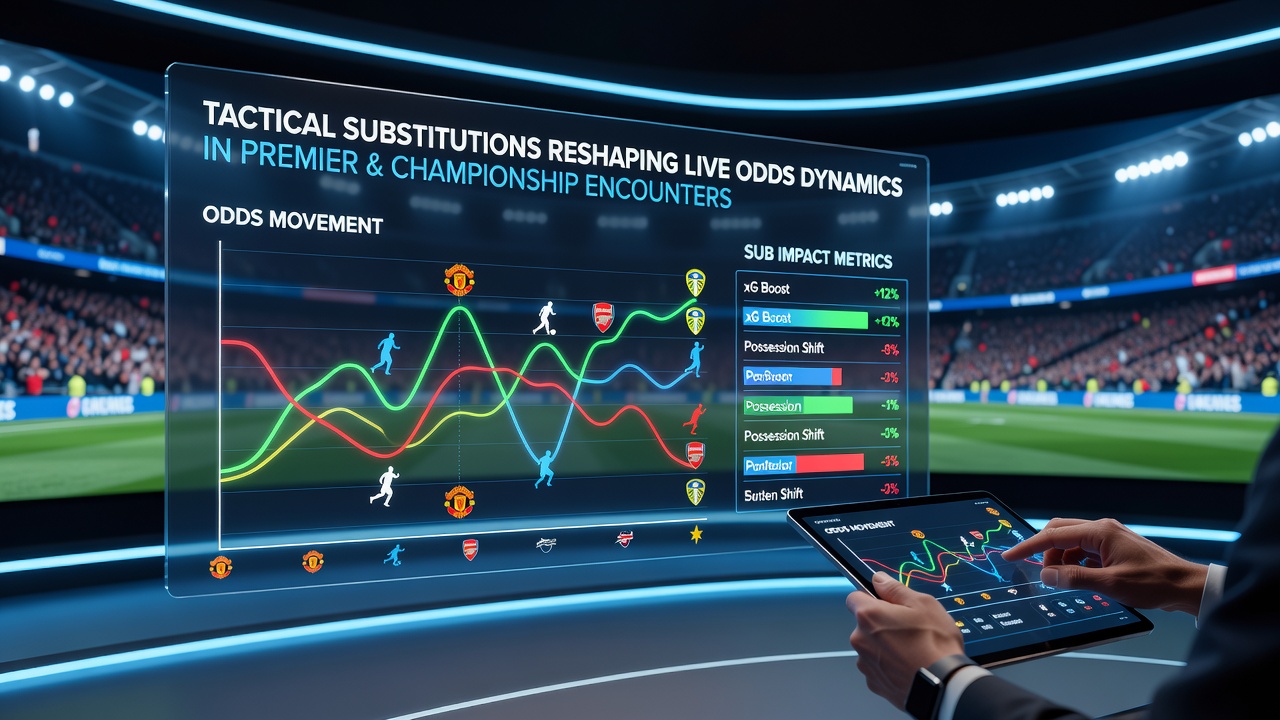
Coaches in the Premier League and Championship have long used substitutions to adjust formations, inject fresh energy, and exploit opponent weaknesses, yet data from recent seasons shows these moves now trigger immediate recalibrations in live betting markets across major bookmakers. Teams that introduce attacking players around the 60-minute mark often see odds on a win or over 2.5 goals compress within seconds, while defensive reinforcements can push under totals and draw lines in the opposite direction, according to aggregated match tracking from Opta and similar providers.
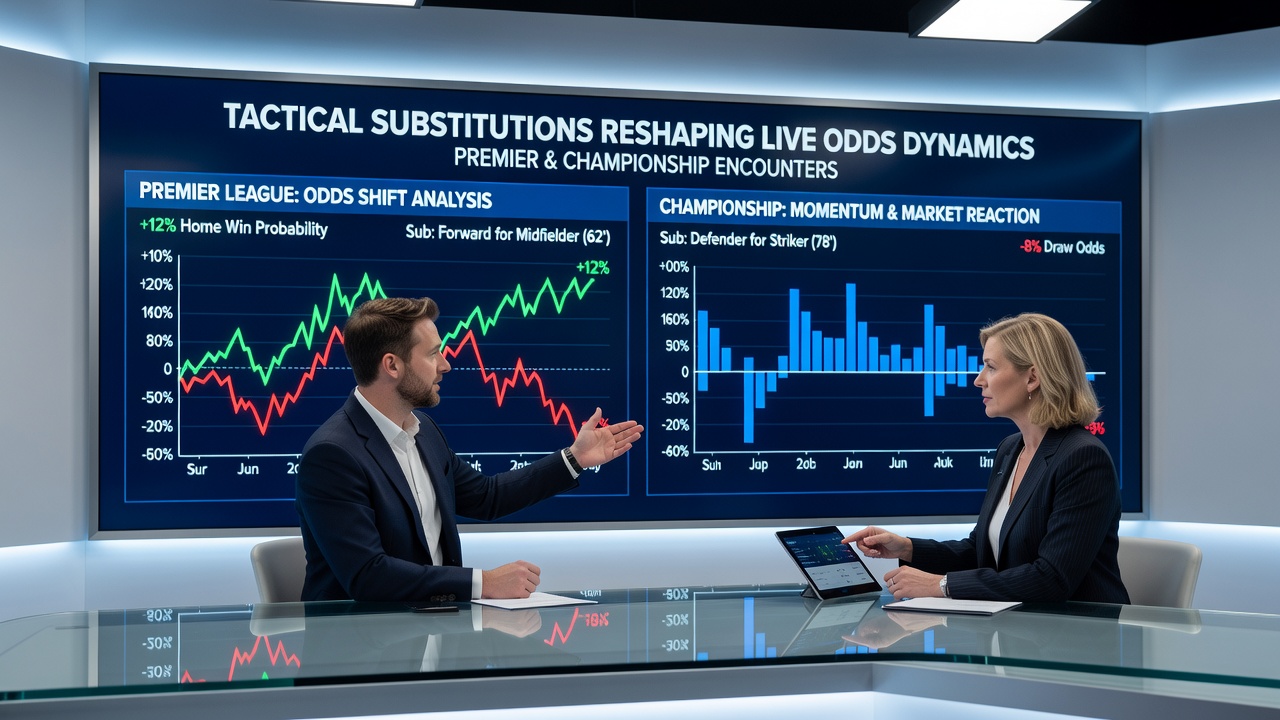
Analysts tracking thousands of fixtures note that the timing and profile of each change matter more than the simple act of making a swap. A forward entering for a midfielder in a 0-0 deadlock frequently accelerates price shifts on both teams to score markets, whereas a like-for-like replacement tends to produce smaller, more gradual movements. These patterns hold across both divisions, although Championship sides, operating with thinner squads, exhibit slightly larger volatility because depth options vary more widely from club to club.
Patterns Observed Across Recent Campaigns
Figures compiled by sports data firms reveal that matches featuring at least two attacking substitutions before the 70th minute produce an average 12 percent swing in live over/under lines compared with games where managers wait until the final 20 minutes. The same datasets indicate that defensive changes correlate with a measurable tightening of draw odds, particularly when a side trails by one goal and seeks to protect a point. Observers note these adjustments occur most often on weekends when multiple fixtures run concurrently, allowing bettors and traders to compare substitution trends across simultaneous games.
Impact on In-Play Accumulators
Accumulators built around in-play events have become sensitive to bench selections because each successful tactical shift can unlock or close several legs at once. A single introduction of a pacey winger, for example, might improve a side’s chance of scoring the next goal while simultaneously raising the probability of a card or corner; traders respond by adjusting multiple markets in quick succession. Research from the European Sports Analytics Network shows that accumulators containing live legs tied to substitution timing have recorded higher payout variance than those based solely on pre-match selections, reflecting the rapid information flow once managers signal their intentions.
Coaches who favour early changes, such as those deploying impact substitutes from the 55th minute onward, tend to generate the sharpest initial reactions. In contrast, managers who delay until the 75th minute or later often see more muted responses unless the player entering possesses a statistically strong record in the closing stages. The difference becomes especially clear during midweek Championship rounds, where fixture congestion forces more rotation and therefore more frequent late adjustments.
Regional Data Comparisons and External Benchmarks
While English domestic leagues provide the primary case studies, comparable dynamics appear in other top European competitions tracked by the same analytics platforms. A 2025 report issued by the Australian Transaction Reports and Analysis Centre examined how roster changes influence betting volumes in A-League matches and found similar compression in live goal lines following attacking substitutions. Parallel observations from Canadian Soccer Association match logs indicate that late defensive reinforcements produce comparable tightening of draw probabilities, suggesting the pattern transcends domestic boundaries.
These cross-border consistencies have prompted several industry groups, including the European Gaming and Betting Association, to publish guidance on monitoring substitution-related market movements. The documents highlight that algorithmic trading systems now incorporate real-time player tracking feeds, allowing odds to update within one or two seconds of a player crossing the touchline. As a result, human bettors who monitor team sheets and historical substitution success rates retain an information edge only when they act before automated systems fully recalibrate.
June 2026 Scheduling Influences
With the 2025-2026 season extending into June because of international calendar adjustments, both the Premier League and Championship face additional fixture congestion. Data released by the English Football League in early 2026 projects a higher average number of substitutions per game during the final stretch, driven by player welfare protocols. Early indications suggest these extra changes will amplify live odds volatility, particularly in matches where promotion or relegation remains undecided. Teams with larger squads appear better positioned to exploit the pattern, while those relying on fewer specialists may experience sharper swings when key personnel enter or exit.
Match officials and league statisticians have also noted an uptick in the use of double substitutions during added time, a tactic that can instantly alter expected goal differentials and therefore live handicap lines. Traders monitoring these windows report that the brief period between the announcement and the actual entry often creates temporary mispricings before markets settle.
Conclusion
Tactical substitutions continue to serve as one of the most direct levers managers possess for influencing both match outcomes and the betting markets that surround them. As player tracking technology and automated trading systems become more sophisticated, the window for meaningful price movement after each change narrows, yet the overall effect on live odds remains measurable across Premier League and Championship encounters. Continued collection of granular substitution data will likely refine existing models, allowing participants in these markets to anticipate rather than merely react to the next set of adjustments.