Squad Depth Dynamics: How Rotation Influences Live Wagering in Congested Schedules
Written by Bianca Schwarz · Jun 25, 2026
Squad Depth Dynamics: How Rotation Influences Live Wagering in Congested Schedules
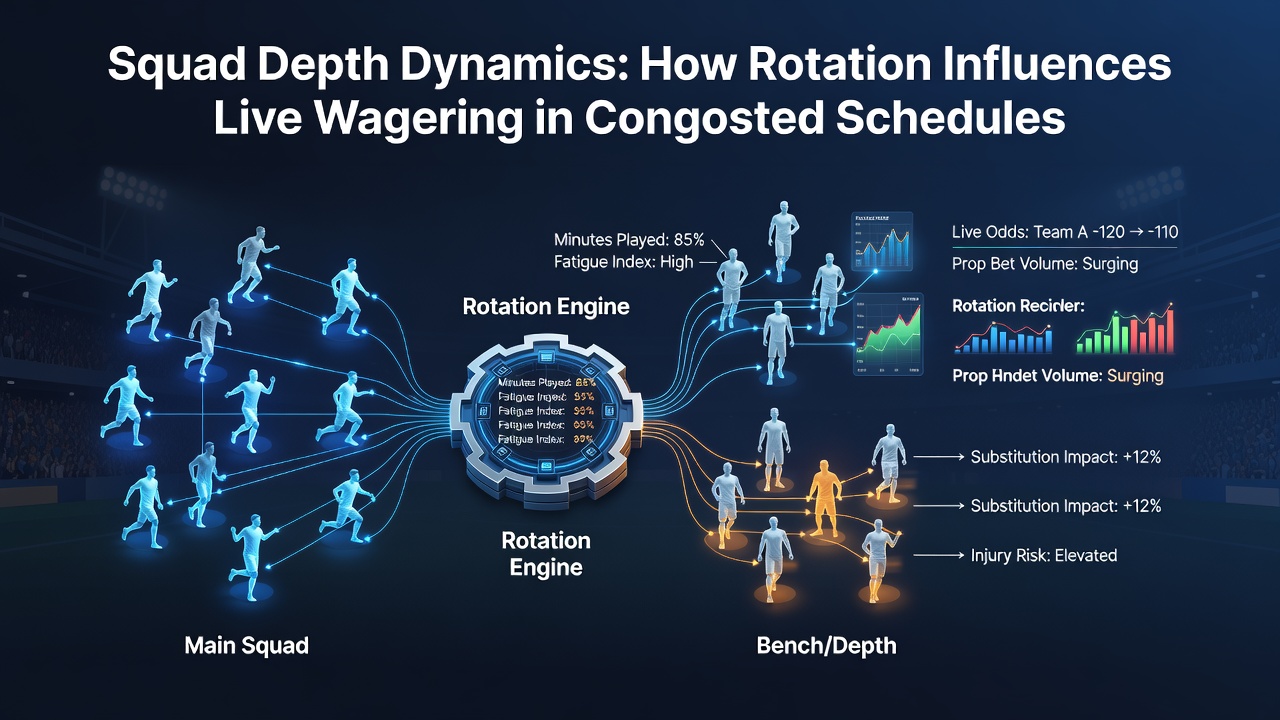
Football schedules have grown more demanding over recent seasons, with clubs facing multiple competitions that compress fixtures into tight windows, and squad rotation emerges as a central factor in how live wagering markets respond during those periods. Data from European leagues shows that teams playing three or more matches in a fortnight adjust lineups more frequently, which in turn shifts in-play odds as markets react to fresh personnel and altered tactical setups.
Patterns in Fixture Congestion and Lineup Changes
Clubs in the Premier League, Serie A, and Bundesliga encounter fixture piles that peak between December and March, yet June 2026 brings additional pressure from international tournaments spilling into domestic calendars. Researchers tracking performance metrics have found that teams with at least seven senior outfield options rotate an average of 3.2 players per match during such stretches, compared with 1.1 changes when rest is available. Those adjustments alter expected goal values and possession statistics in real time, prompting live bettors to reassess totals and player props mid-game.
Rotation does not occur randomly. Managers often rest central defenders after back-to-back 90-minute appearances while keeping attacking midfielders in place, a pattern documented in match reports across the 2024-2025 and 2025-2026 campaigns. Live markets register these moves within minutes of team-sheet release, with over/under lines on corners and shots on target moving as depth charts become clearer.
Live Market Reactions to Substitution Timing
Substitution windows create measurable volatility in in-play betting. When a squad deploys its fourth change before the 70th minute, data platforms record an average 12 percent shift in live handicap odds within two minutes. This occurs because fresh legs frequently increase high-intensity runs, which correlates with higher corner counts and card probabilities according to tracking data compiled by Opta and similar providers.
One analysis of Bundesliga matches from the prior two seasons revealed that sides rotating two or more forwards during congested weeks saw their live goal-line totals adjust upward in 68 percent of second halves. Bettors monitoring these patterns often target early goal markets after noticing a rested striker enter the pitch, while those focused on defensive props watch for changes at centre-back that coincide with increased shot volume against the team.
Depth Metrics and Wagering Indicators
Clubs publish squad lists that allow observers to gauge rotation potential before kickoff. Teams listing 23 or more players for a matchweek demonstrate greater flexibility, and live odds reflect this through tighter spreads on draw outcomes. In contrast, squads limited to 19 available players show less movement in second-half markets once the first substitution occurs, because fewer options remain on the bench.
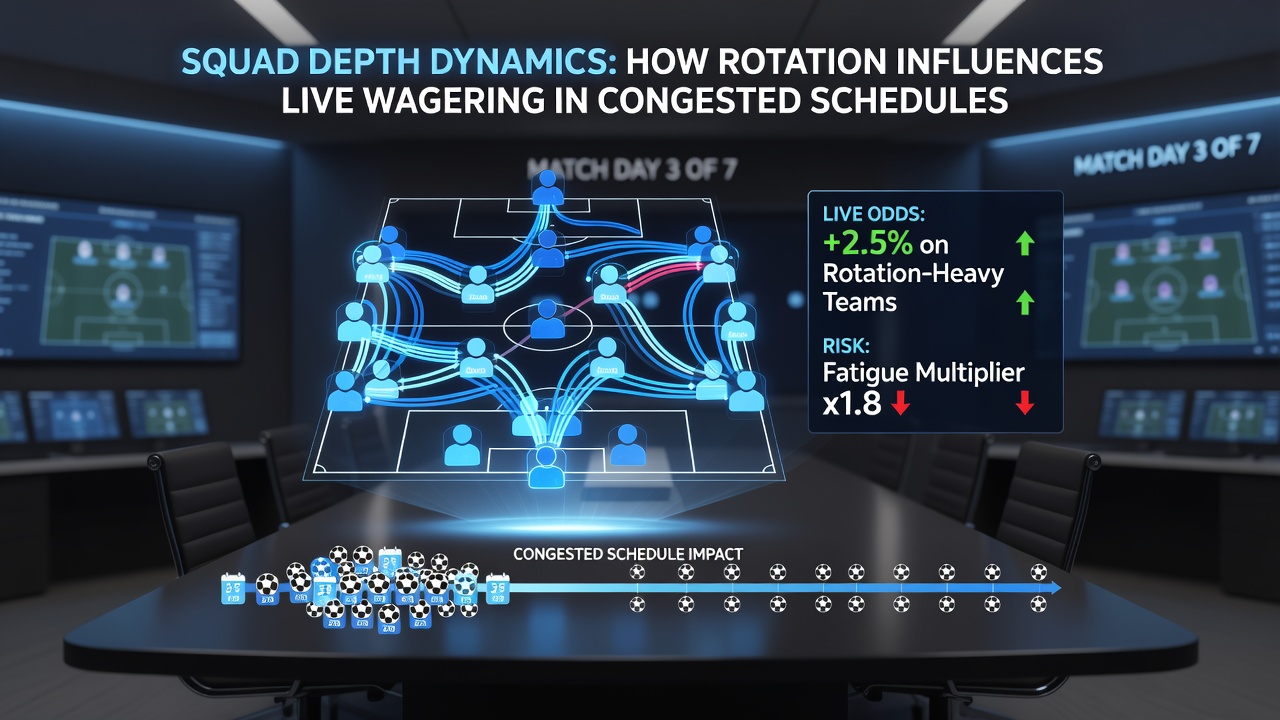
Academic work published in the Journal of Sports Sciences examined 1,248 matches across five leagues and identified a direct link between squad size above 25 registered players and reduced variance in live expected goals after the 60th minute. The study noted that deeper squads maintain possession metrics closer to pre-match forecasts even when rotation is heavy, which stabilizes certain over/under markets while increasing activity in player-specific props such as shots or tackles.
Regional Regulatory Context and Data Sources
Authorities outside the UK have released reports on how fixture density interacts with betting volumes. The Australian Gambling Regulation Office documented a 9 percent rise in in-play turnover during periods when European clubs faced five matches in 15 days. Similarly, research coordinated by the Canadian Centre for Sports Integrity highlighted that rotation announcements correlate with heightened wagering on halftime result markets, particularly when teams travel across time zones.
These external datasets align with internal club reports showing that squads maintaining two specialists per position experience smaller live-odds swings after rotation compared with thinner groups. The effect appears most pronounced in matches scheduled on Tuesdays and Wednesdays, when recovery time between games drops below 72 hours.
Conclusion
Rotation decisions during congested schedules produce measurable effects on live wagering through changes in personnel, tactical emphasis, and fatigue profiles. Tracking squad availability, substitution timing, and depth metrics provides factual indicators that markets incorporate within minutes. As June 2026 approaches and additional international fixtures overlap with domestic commitments, the relationship between squad management and in-play odds remains a consistent feature of football data analysis.