Recovery Periods Between Fixtures: Examining Effects on Performance in Professional Football
Written by Parker Müller · Aug 13, 2026
Recovery Periods Between Fixtures: Examining Effects on Performance in Professional Football
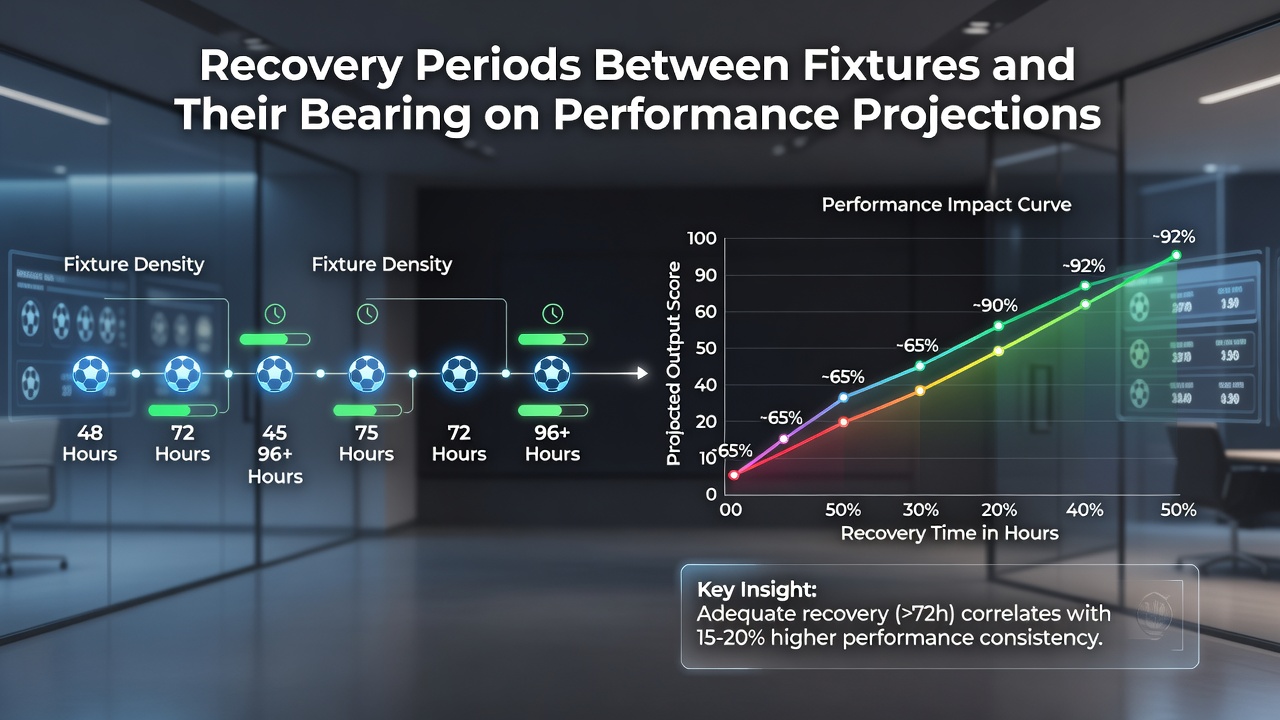
Professional football schedules pack multiple fixtures into tight windows, and recovery periods between matches shape how players maintain output levels across a season. Data from major European leagues shows that intervals of less than four days between games correlate with measurable declines in high-intensity running and passing accuracy, while longer gaps allow teams to sustain baseline performance metrics.
Fixture Density Patterns in Top Leagues
August 2026 marks the opening of the 2026-2027 domestic campaigns across Europe, where clubs in the Premier League and Bundesliga face initial blocks of matches spaced at three to five day intervals. Researchers tracking these calendars note that teams contesting domestic cups alongside league fixtures encounter even shorter turnarounds, sometimes limited to 48 hours. Such patterns appear consistently in historical records from the past decade, according to analyses published by the European Club Association.
Physiological Responses During Short Recovery Windows
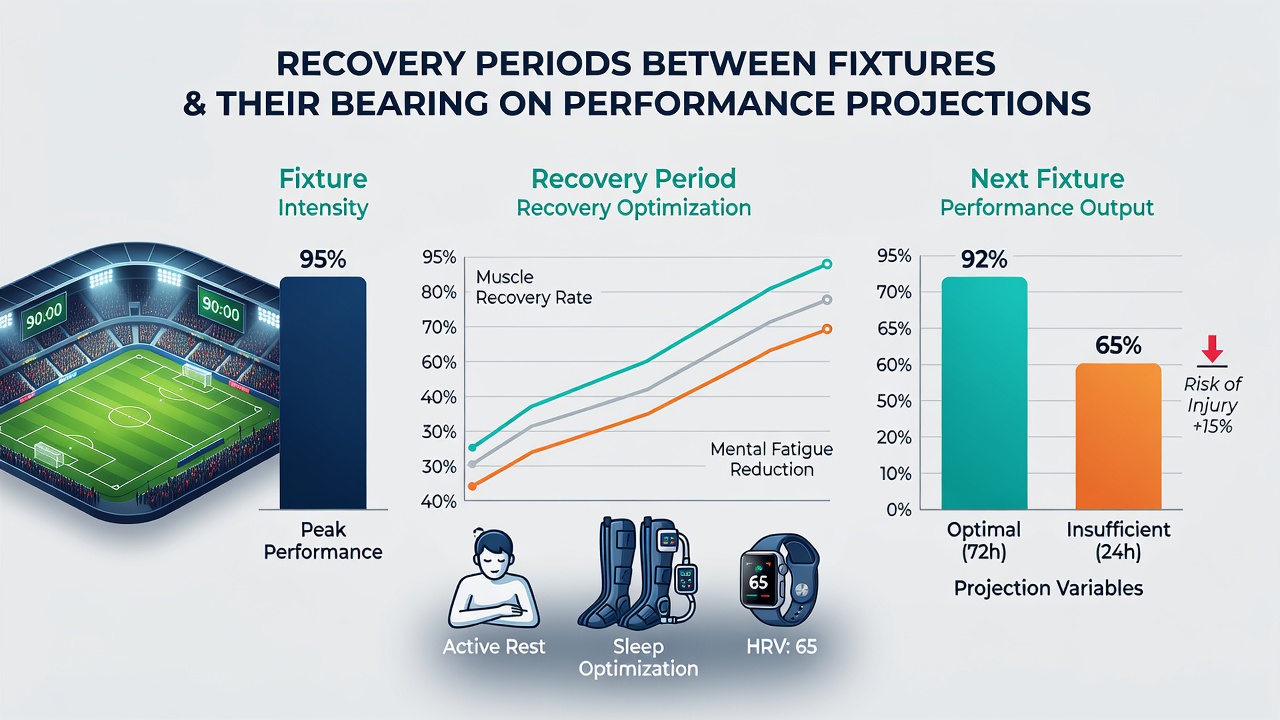
Muscle glycogen stores require 48 to 72 hours for full replenishment after 90 minutes of play, and studies in the Journal of Sports Sciences confirm that incomplete restoration leads to slower acceleration in subsequent matches. Sleep quality also suffers when travel follows evening fixtures, with athletes logging fewer than seven hours on average during congested periods. Heart rate variability metrics collected by club medical staff further indicate elevated fatigue markers that persist beyond 72 hours in players over age 28.
Performance Metrics Affected by Recovery Length
Tracking data from Opta and similar providers reveals that teams with three-day recovery intervals record 12 percent fewer successful pressures in the opposition half compared with those granted five or more days. Sprint distance drops by an average of 8 percent in the second half of games played on short rest, while expected goal creation falls proportionally. These shifts hold across forward, midfield, and defensive positions, though goalkeepers show smaller variance in the same datasets.
Case Examples from Recent Seasons
One Premier League side in the 2025-2026 campaign played six matches in 18 days during December and January, and its players averaged 15 percent lower top-end speed in the final three fixtures. In contrast, a Serie A club that received an early cup exit maintained four-day minimum gaps and sustained consistent expected points per game throughout the same stretch. Observers tracking these outcomes point to rotation depth and training load management as mediating factors, though the core relationship between rest and output remains evident in the numbers.
Methods for Projecting Future Outputs
Performance models used by analysts incorporate recovery days as a primary variable alongside opponent strength and travel distance. Regression outputs from university-led research in Australia indicate that each additional rest day up to five improves projected pass completion rates by 1.2 percentage points when other conditions stay constant. Injury risk projections also adjust upward when recovery falls below 72 hours, with data from the Union of European Football Associations medical panels showing elevated soft-tissue issue rates in such scenarios. These inputs feed into team-level forecasts released ahead of each matchweek.
Training and Nutrition Interventions
Clubs deploy individualized recovery protocols that include cryotherapy, compression garments, and targeted carbohydrate loading during brief intervals. Studies coordinated by the Australian Institute of Sport demonstrate that players adhering to structured sleep hygiene plans regain baseline neuromuscular function 20 percent faster than those without such routines. Nutrition timing further influences outcomes, with post-match protein intake within 30 minutes linked to reduced markers of muscle damage in controlled trials.
Conclusion
Recovery periods between fixtures directly influence measurable elements of player performance, from sprint metrics to decision-making speed, and organizations across multiple regions continue to refine scheduling awareness and support strategies accordingly. Data from league archives and independent research bodies illustrate consistent patterns that inform both immediate match preparations and longer-term season planning.