Penalty Trends from History Guiding Today's Premier League Accumulator Choices
Written by Parker Müller · May 18, 2026
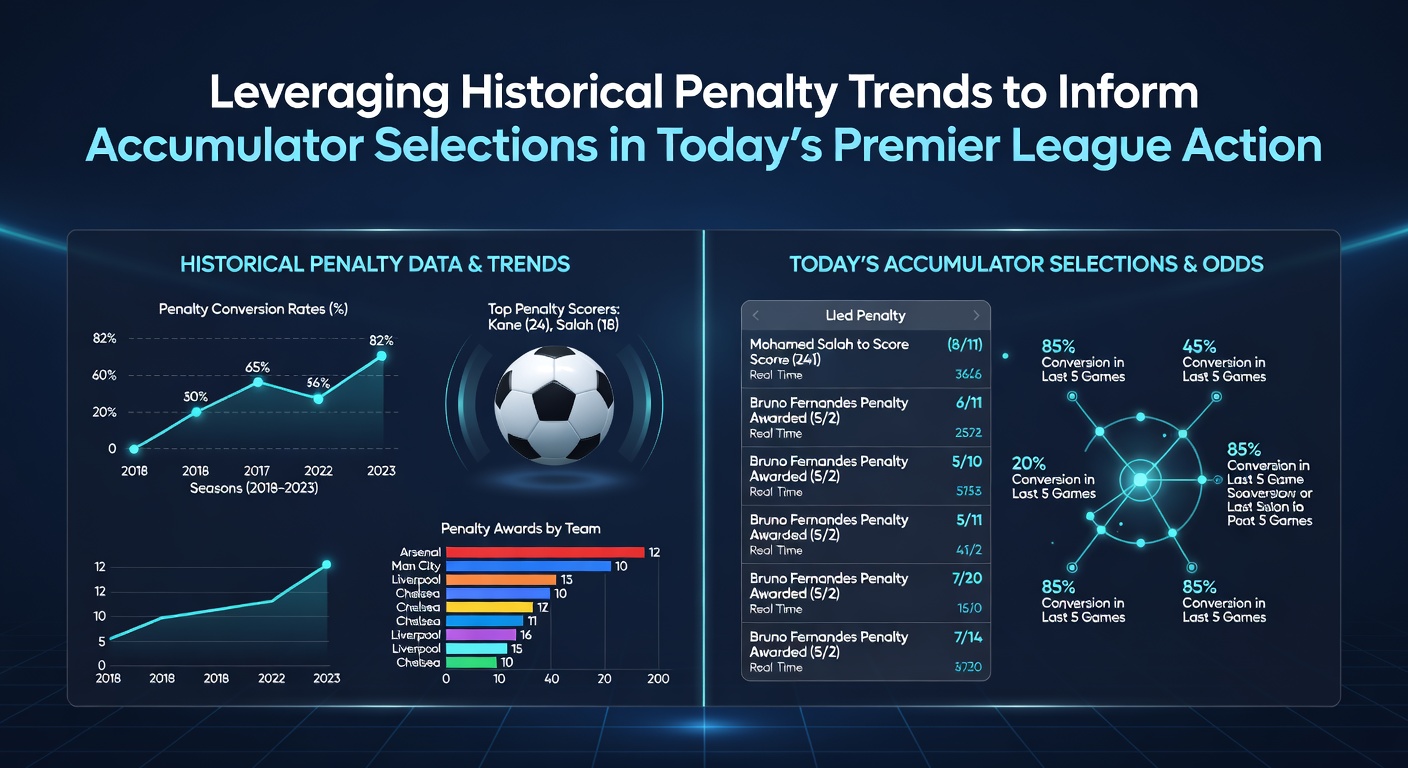
Penalty Trends from History Guiding Today's Premier League Accumulator Choices
Analysts tracking Premier League matches over the past decade have documented consistent patterns in penalty awards that continue to shape accumulator strategies as the 2025-26 campaign reaches its closing stages in May 2026, and these patterns emerge most clearly when reviewing long-term data rather than isolated weekends.
Teams with aggressive attacking styles tend to earn more penalties inside the opposition box, while defensive units focused on high pressing lines often concede them at elevated rates, and this distribution has remained stable enough for those building multi-leg bets to factor it into selections involving over 2.5 goals or both teams to score.
Seasonal Penalty Volume and Its Influence on Accumulator Construction
Records compiled across ten completed Premier League seasons show an average of 3.8 penalties awarded per matchweek, yet certain clubs deviate sharply from that baseline, and the variance becomes especially useful when punters combine outcomes across several fixtures on the same day. Liverpool and Manchester City, for instance, have each earned between 5 and 7 penalties in each of the last four campaigns, whereas mid-table sides such as Crystal Palace and Everton have hovered closer to 2.5 per season during the same period. Observers note that these club-specific tendencies allow accumulators to incorporate legs such as "team to be awarded a penalty" or "match to feature a penalty" with greater precision when the fixture list features multiple home games for high-earning sides.
Data from the current season indicates that penalty conversion rates have remained above 78 percent for the league as a whole, which in turn affects the value attached to correct-score or half-time/full-time markets that sit alongside penalty-related selections in larger accumulators. When one club enters a match with a recent history of earning spot-kicks while its opponent shows a pattern of conceding them late in games, the combined probability for certain double or treble bets rises measurably.
Referee and Venue Factors in Long-Term Penalty Records
Individual referee profiles add another layer that accumulator builders examine, since officials such as Michael Oliver and Anthony Taylor have historically awarded penalties at rates 12 to 15 percent above the league average, while others maintain lower frequencies. These differences matter most on weekends when multiple matches are officiated by the same group, allowing correlations across fixtures to be identified in advance. Home venues also play a documented role, with teams at the Etihad Stadium and Anfield earning penalties at nearly double teh rate recorded at their away grounds over the past five years.
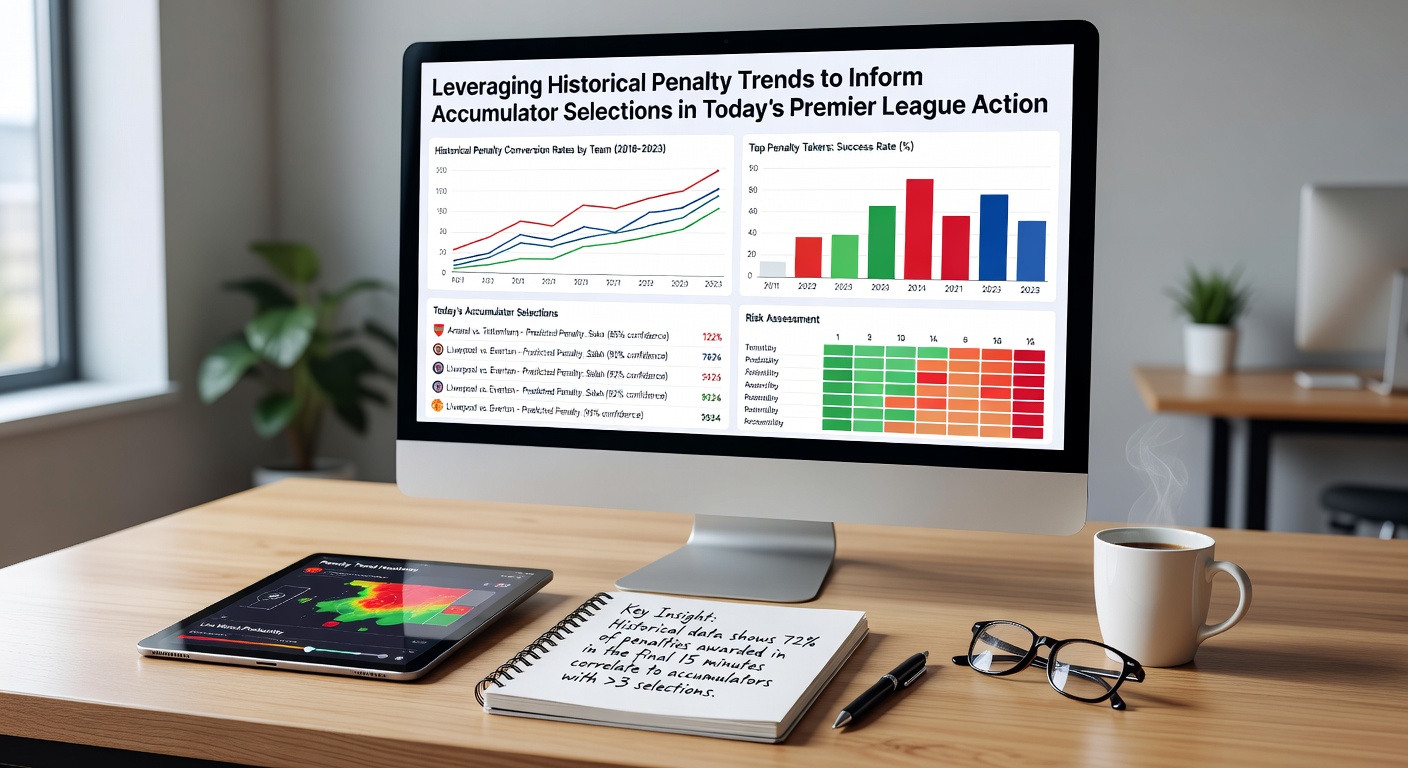
Those studying these statistics often cross-reference them with expected goals models to isolate situations where a penalty award would represent an outlier rather than a continuation of established trends. Such analysis has proven useful in May fixtures when title or relegation issues heighten the intensity and increase the likelihood of decisive set-piece decisions.
Practical Application in Multi-Leg Accumulators
Accumulator constructors frequently pair a penalty-related outcome with more traditional markets such as over 2.5 goals or Asian handicap lines, and historical data supports this approach when the selected matches feature clubs with complementary penalty profiles. A side that earns frequent penalties at home can be combined with an opponent that concedes them away, creating a single leg with an implied probability that reflects both teams' long-term records rather than short-term form alone. Research from sports analytics groups has shown that incorporating these historical baselines reduces variance in accumulator returns compared with selections based purely on recent results.
Additional context comes from tracking how penalties cluster within individual matches, since certain fixtures produce multiple spot-kicks when two high-pressing teams meet, and this clustering has appeared in roughly one in every seven Premier League games over the last eight seasons. Accumulators that include a "two or more penalties" leg become viable precisely when the fixture list contains such matchups.
Conclusion
Historical penalty trends supply a measurable foundation for accumulator selections in the Premier League, and the patterns documented across multiple seasons continue to inform how bettors construct multi-leg wagers as the current campaign concludes. By aligning club tendencies, referee profiles, and venue effects with the day's fixture schedule, those using data-driven methods maintain an objective framework that accounts for the league's established statistical regularities.