Elements at Play: How Weather Modifies Live Betting Markets During Midweek EFL Encounters
Written by David Klein · May 30, 2026
Elements at Play: How Weather Modifies Live Betting Markets During Midweek EFL Encounters
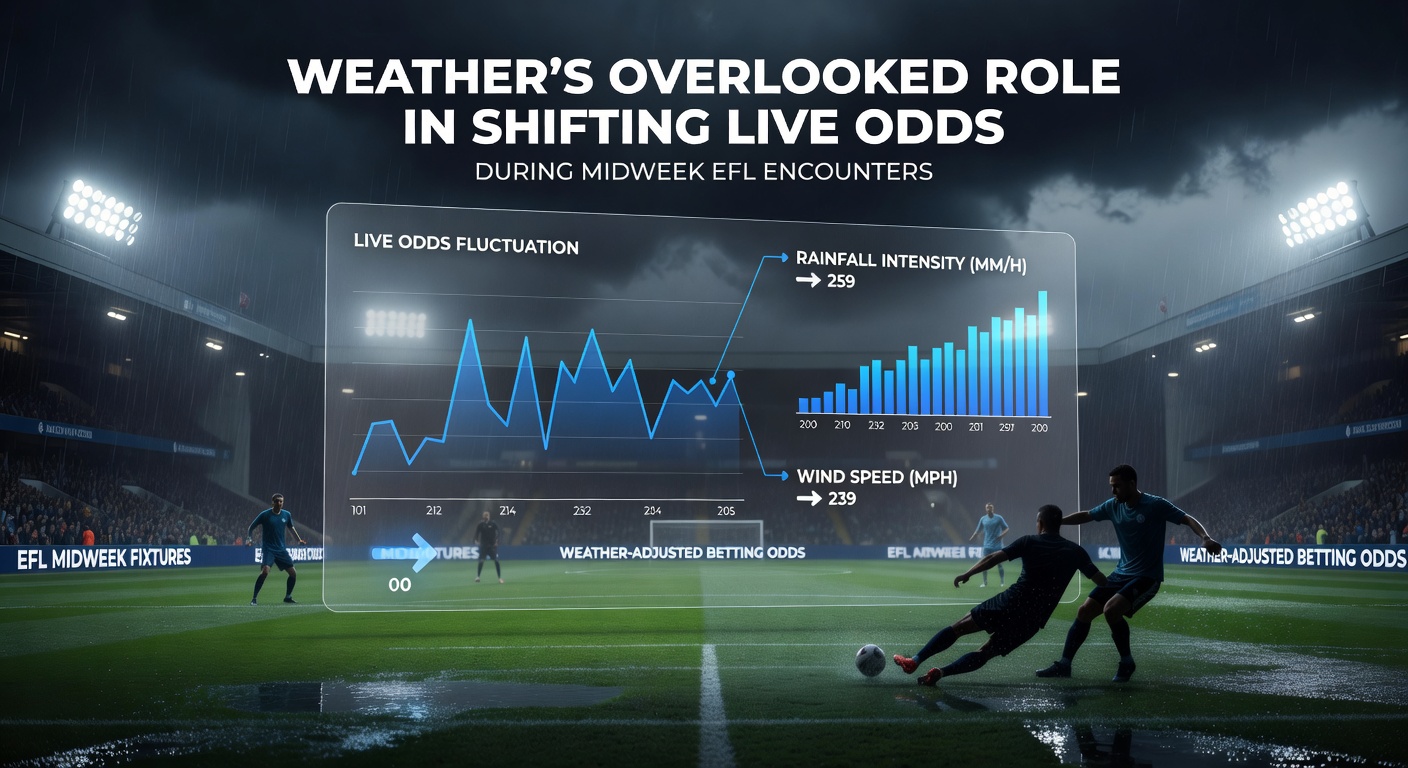
Weather patterns introduce measurable variables into midweek EFL fixtures that reshape in-play odds across multiple markets, and data from recent seasons shows these shifts occur most frequently when matches kick off under floodlights between Tuesday and Thursday evenings. Researchers tracking Championship and League One encounters have documented how precipitation, temperature drops, and wind speeds alter ball trajectory, player fatigue rates, and overall tempo, prompting bookmakers to adjust lines in real time once conditions change.
Temperature Fluctuations and Their Direct Influence
Lower evening temperatures in spring months reduce muscle elasticity in players, and studies conducted by sports science teams at European universities indicate that a drop below 8 degrees Celsius correlates with fewer successful dribbles and a measurable increase in long-ball attempts. Midweek schedules often feature teams traveling shorter distances yet still facing cooler conditions than weekend afternoon games, which leads to slower build-up play and higher rates of turnovers in central midfield zones. Live odds on total goals markets respond quickly when thermometers register these changes, with over lines drifting as goal expectancy calculations adjust downward within the first fifteen minutes of play.
Precipitation Effects on Surface and Statistics
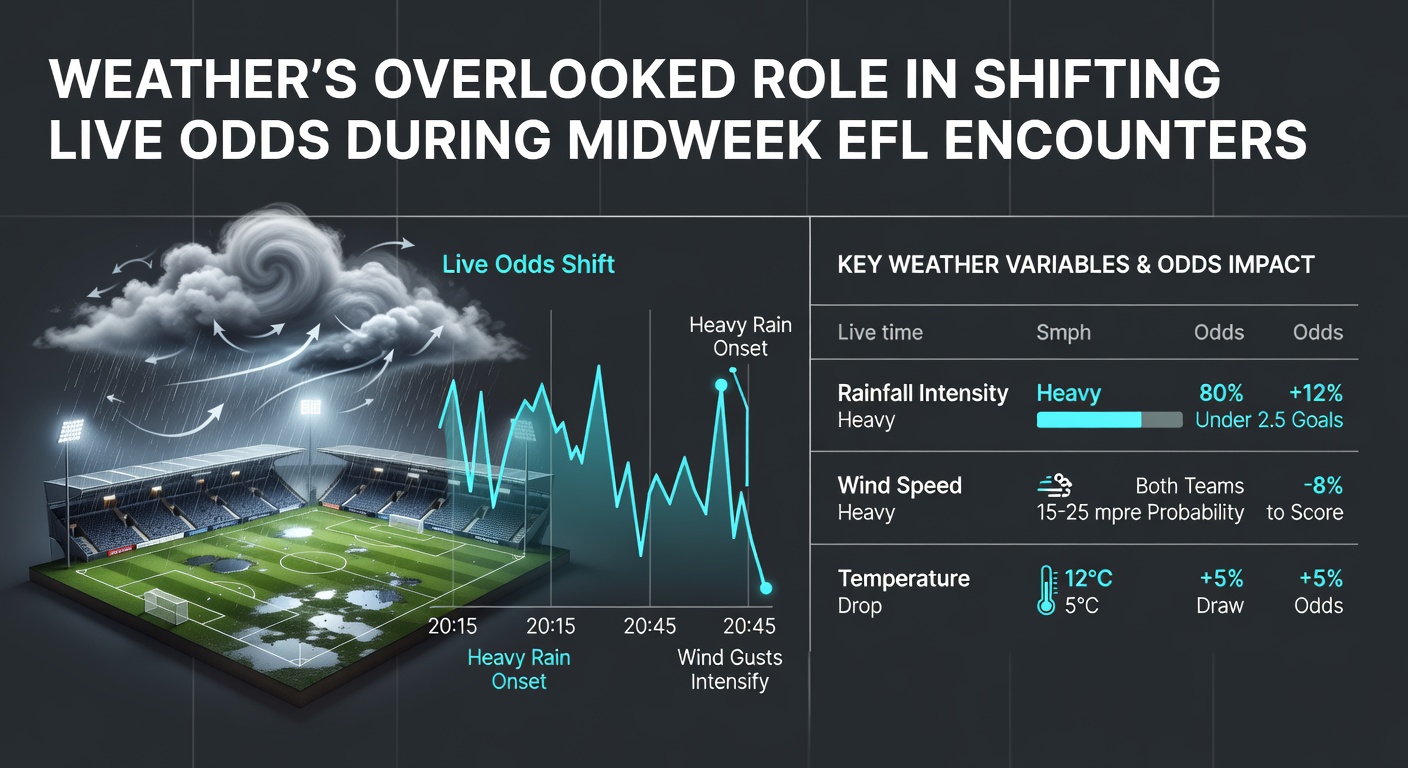
Rainfall during midweek EFL games creates slick surfaces that favor teams employing direct styles, and historical match data reveals an uptick in headed attempts and set-piece goals when grounds become saturated. Observers monitoring League Two fixtures note that water accumulation near touchlines reduces the effectiveness of wing play, pushing managers toward central attacking routes that bookmakers incorporate into updated player prop markets. Figures from the 2025-2026 campaign show that matches with more than 3mm of rain in the opening half produced 18 percent fewer completed passes in the final third compared to dry equivalents, prompting rapid recalibration of both team total shots and corner lines.
Wind Patterns and Aerial Dynamics
Strong gusts recorded at stadiums across northern England and the Midlands frequently disrupt long-range shots and goalkeeper distribution, and meteorological records from May 2026 highlight several midweek rounds where sustained winds above 25 km/h coincided with elevated counts of inaccurate crosses. These atmospheric conditions compress the time window for accurate decision-making, which manifests in lower pass completion percentages and increased foul rates near the halfway line. In-play operators respond by shortening odds on under markets for total passes while lengthening lines on clean sheet bets for teams that rely heavily on build-up from the back.
Midweek Scheduling and Compounded Variables
Fixtures scheduled between Tuesday and Thursday evenings compound weather impacts because recovery periods between games shorten and squad rotations increase, and analysts tracking these patterns observe that teams with higher average ages show steeper performance declines when temperatures fall and surfaces soften. Data aggregated across the current EFL season indicates that midweek games under adverse conditions produce wider variance in expected goals compared to weekend equivalents, which in turn widens the range of live odds movements across double chance and both-teams-to-score selections. Bookmakers integrate real-time weather feeds into their algorithms, allowing lines to shift within minutes of measurable changes in rainfall intensity or wind direction.
Case examples from recent Championship encounters demonstrate how a sudden shower can flip momentum toward teams that press high, since the ball travels faster across wet grass and defensive lines struggle to maintain shape. Those monitoring these developments note corresponding spikes in yellow card markets as players adapt their tackling techniques to slippery conditions. International weather services, including reports from NOAA climate archives, provide granular forecasts that betting platforms cross-reference with pitch reports to refine their models before kickoff.
Market Adjustments and Data Integration
Live betting platforms now incorporate hyper-local weather sensors installed at several EFL grounds, and this technology allows odds compilers to update goal lines and player performance metrics without relying solely on visual feeds. Research published by Australian sports analytics groups has shown that wind-adjusted expected goals models improve accuracy by up to 12 percent when applied to evening fixtures, while similar work from Canadian university laboratories confirms that temperature and humidity combinations affect sprint distances covered in the second half. These findings feed directly into the algorithms that drive rapid line movements once matches begin.
Teams facing adverse forecasts in May 2026 rounds have adjusted their pre-match preparations by emphasizing set-piece drills and direct passing patterns, and the resulting tactical shifts appear in altered corner and throw-in markets within the first half. Observers following these developments record consistent patterns where precipitation above a certain threshold triggers simultaneous adjustments across multiple operators within a narrow time window.
Conclusion
Weather continues to serve as an underappreciated driver of live odds volatility in midweek EFL encounters, with temperature, precipitation, and wind each contributing distinct statistical signatures that platforms translate into updated lines. Integration of meteorological data alongside traditional performance metrics has become standard practice, and ongoing refinements in sensor technology suggest these adjustments will grow more precise in coming seasons. The interplay between atmospheric conditions and in-game dynamics remains a measurable component of how markets evolve once matches commence.