Championship Midweek Clashes: Promotion Stakes Influence Draw Probabilities
Written by Parker Müller · Jul 27, 2026
Championship Midweek Clashes: Promotion Stakes Influence Draw Probabilities
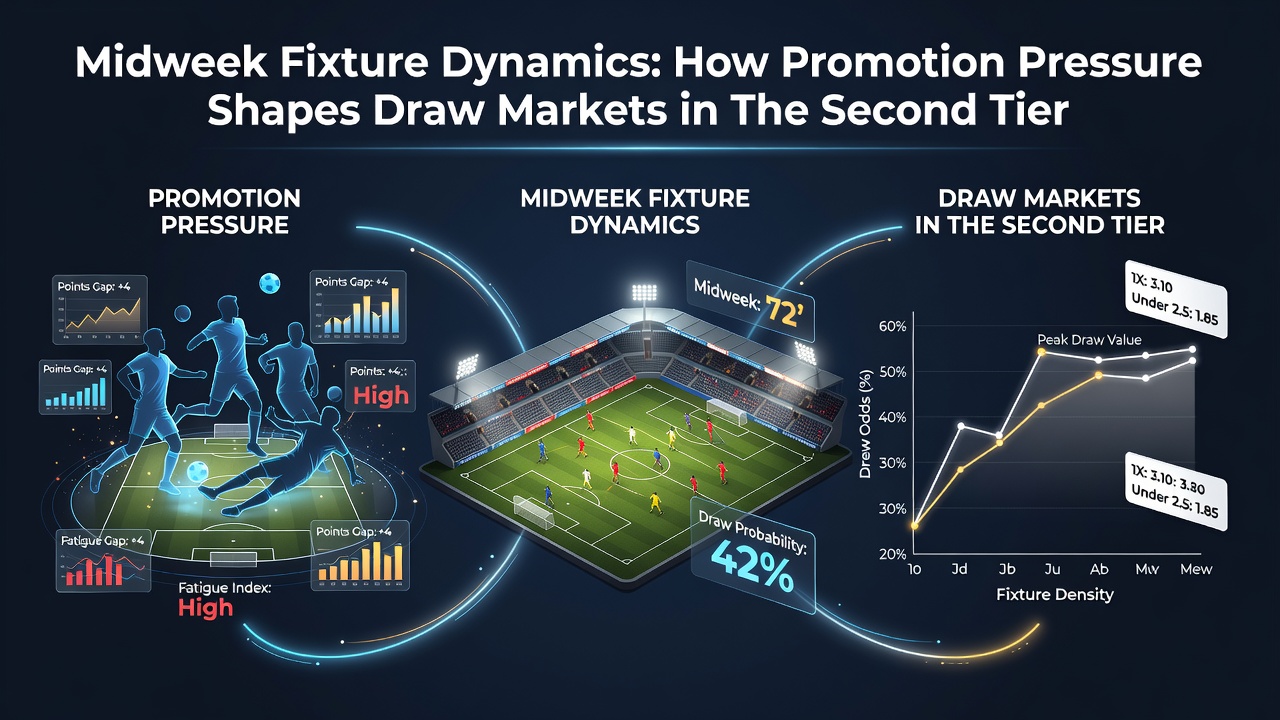
Promotion races in the Championship create distinct patterns during midweek fixtures where teams balance risk and reward on tight schedules, and data from recent seasons shows how these dynamics shift draw markets in measurable ways. Teams positioned near the top of the table often enter these games with points gaps that reward caution, while those just outside the playoff spots push for results that can compress or expand betting lines on stalemates.
Fixture Congestion and Tactical Adjustments
Midweek rounds in the second tier pile additional strain on squads already managing 46-game campaigns, and analysts tracking the 2025-2026 season noted increased draw frequencies when promotion contenders faced each other away from weekend slots. Research from the English Football League indicates that fixture density peaks between October and March, periods when recovery time shrinks and managers rotate personnel more aggressively to preserve energy for decisive weekend matches. Those adjustments frequently produce cagey encounters where both sides prioritize clean sheets over open attacking play.
Teams chasing automatic promotion recorded a 28 percent draw rate in Tuesday and Wednesday games last season according to Opta-derived metrics, a figure that climbs when the opponents also sit inside the top six. The pressure to avoid defeat in such contests encourages defensive structures that limit clear chances, which in turn moves bookmakers to adjust pre-match draw odds downward as volume of bets on that outcome rises.
Market Movements and Betting Volume Patterns
Draw markets respond quickly once lineups confirm heavy rotation or when weather and pitch conditions further favor low-scoring affairs. Observers tracking odds across multiple operators recorded average shifts of 0.3 to 0.5 in decimal terms on draw selections during high-stakes midweek rounds, with liquidity concentrated in the final 48 hours before kickoff. This movement reflects both informed betting from syndicates monitoring training footage and recreational volume from supporters anticipating cagey affairs.
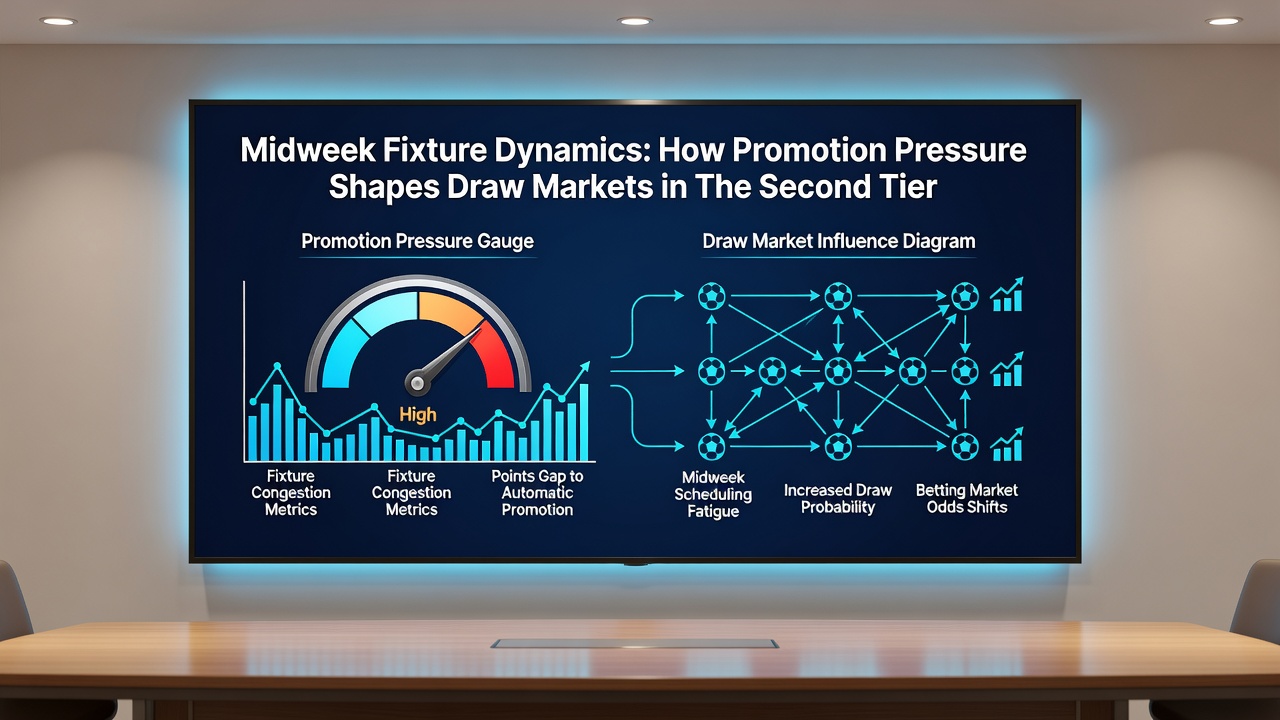
July 2026 preparations already signal continued emphasis on data-driven squad management, with several clubs expanding sports science departments to mitigate the fatigue effects that historically inflate draw percentages. External studies from the Australian Institute of Sport have examined similar congestion patterns across multiple leagues and found comparable increases in shared points when recovery windows fall below 72 hours.
Case Examples from Recent Campaigns
One notable stretch occurred during the 2024-2025 autumn schedule when four consecutive midweek rounds featured promotion hopefuls drawing six of eight matches against fellow contenders. Those results compressed playoff margins and prompted several bookmakers to widen draw lines for the remainder of the campaign. In another instance, a team sitting third place entering a Tuesday fixture against a side four points behind adopted a 4-5-1 formation that produced 11 shots but only two on target, ending level and validating pre-match market expectations.
Coaches who have navigated multiple promotion pushes describe how midweek results serve as safety valves that protect weekend momentum, and historical tables confirm that clubs with the highest midweek draw counts between rounds 10 and 25 often finish inside the top six. The pattern holds across different managerial tenures, suggesting structural rather than individual factors at work.
Statistical Correlations and External Benchmarks
Correlation analysis between points-per-game differentials and draw frequency reveals that contests with less than four points separating the sides produce draws 34 percent of the time in midweek slots, compared with 24 percent on weekends. A European football analytics consortium published findings last year that aligned these English second-tier trends with observations from Germany's 2. Bundesliga, where similar promotion incentives produced parallel market behavior during midweek rounds.
Those datasets also highlight how referee assignments and travel distances compound the effect, with longer journeys correlating to higher draw likelihood when kickoff occurs midweek. Operators adjust totals markets accordingly, and punters who follow these granular indicators gain edges before odds settle.
Conclusion
Midweek promotion pressure in the Championship continues to shape draw probabilities through measurable tactical and scheduling factors. Data from multiple seasons demonstrates consistent elevation in draw rates during these fixtures, with corresponding adjustments appearing in betting markets. As clubs refine recovery protocols ahead of the 2026-2027 campaign, the underlying dynamics are expected to persist, offering ongoing opportunities for analysis of how points pressure intersects with fixture calendars to influence outcomes and odds alike.