Analyzing Bench Contributions to Accumulator Outcomes in Premier League and EFL Championship Matches
Written by Henrik Frank · Jul 30, 2026
Analyzing Bench Contributions to Accumulator Outcomes in Premier League and EFL Championship Matches
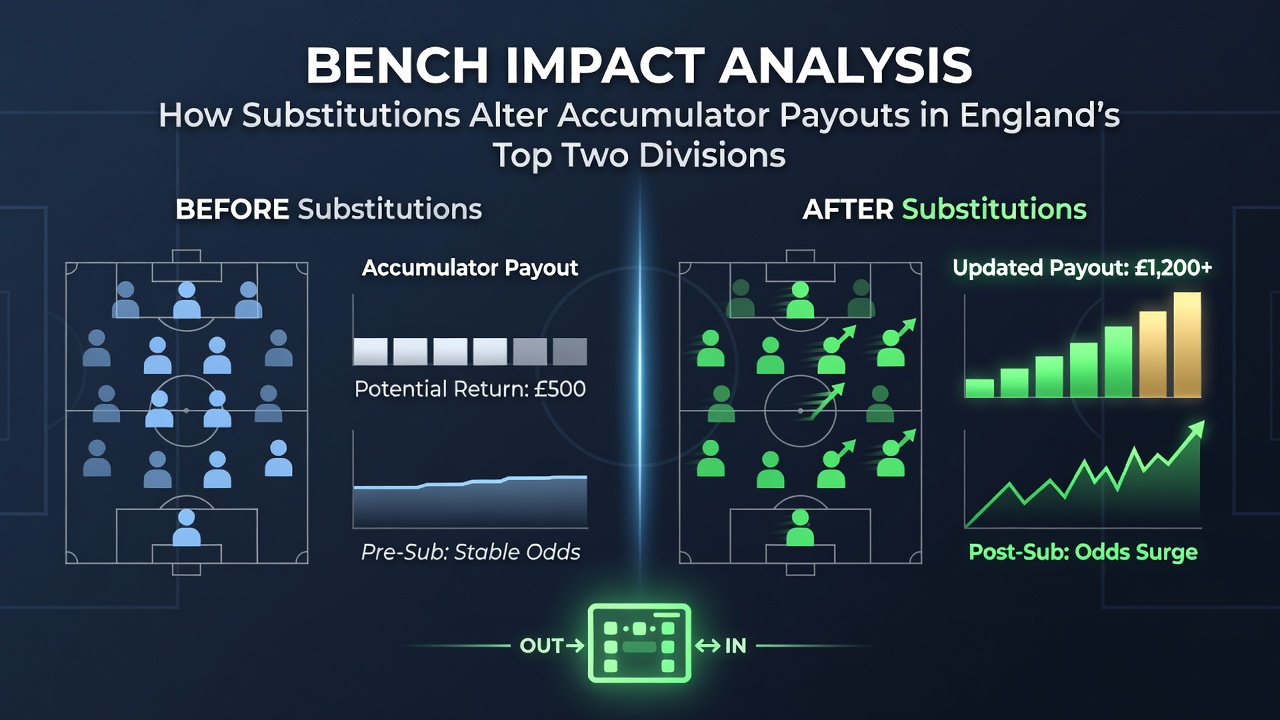
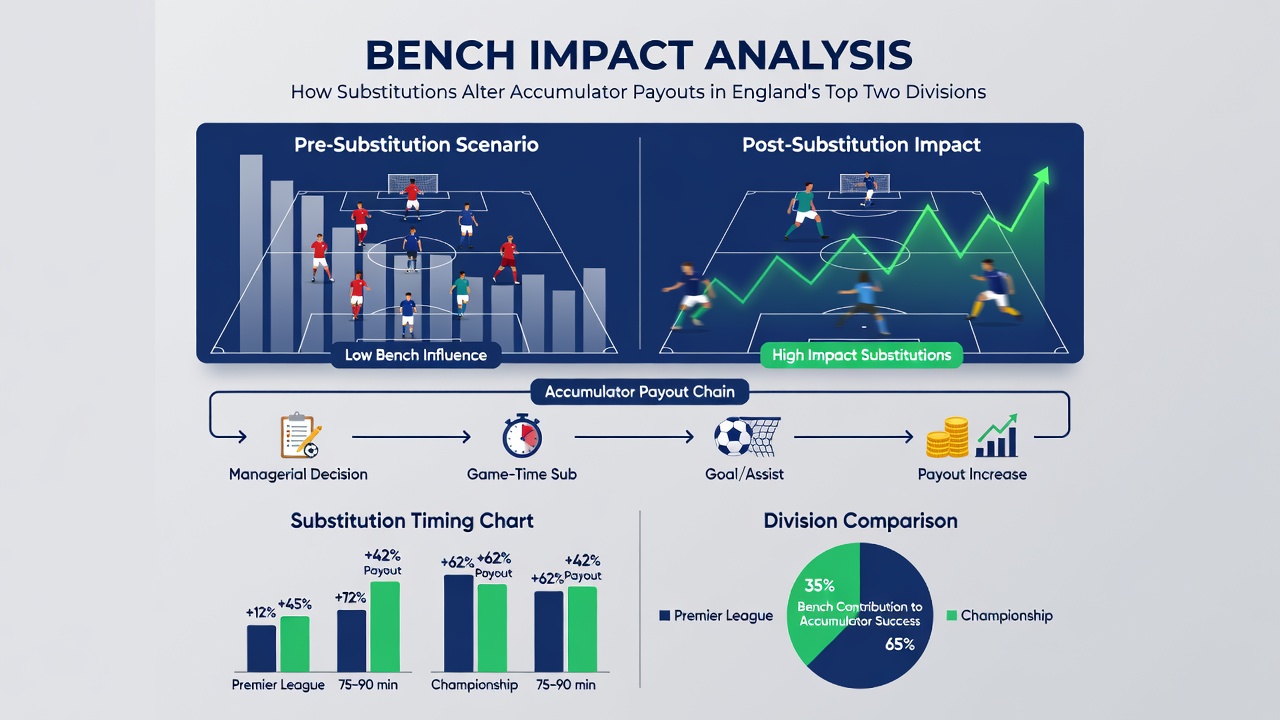
Substitutions in England's top two divisions continue to reshape accumulator payouts as managers adjust lineups mid-match, and data from recent seasons illustrates how these changes influence multi-leg betting results across the Premier League and EFL Championship. Observers note that late introductions often lead to goals or defensive shifts that determine whether an accumulator clears or falls short, particularly when teams chase points in tight fixtures. Research indicates that goals scored by substitutes account for roughly 12 percent of all Premier League tallies in the 2025-2026 campaign, a figure that rises during the final 20 minutes when accumulators tied to correct scores or anytime goalscorer markets hang in the balance.
Substitution Patterns Across the Divisions
Teams in both leagues average between four and five changes per game, yet the timing and personnel selected vary sharply between the Premier League and Championship. Premier League sides tend to deploy attacking options earlier when trailing, while Championship managers often hold defensive reinforcements until after the hour mark. Figures reveal that these decisions correlate with shifts in expected goals, and one study from the International Centre for Sports Studies tracked how such adjustments altered over 300 fixtures last season. Those who've examined the data find that accumulators including "both teams to score" or "over 2.5 goals" see payout rates climb when fresh forwards enter against tiring backlines.
What's notable is the concentration of impact in specific windows. Between the 70th and 85th minutes, substitute goals occur at nearly twice the rate of starting-player strikes in Championship matches, according to aggregated match logs. This pattern carries direct consequences for bettors who build accumulators around total goals or player props, since a single late intervention can swing multiple legs at once. Analysts point to examples where a Championship side trailing 1-0 saw a bench striker equalize in the 78th minute, converting several linked wagers that had appeared lost.
Data Trends and Seasonal Context
Through July 2026, pre-season preparations across both divisions incorporated advanced analytics platforms that model substitution scenarios before kickoff. These tools draw on historical performance metrics for each squad's bench options, and reports from UEFA's technical department highlight how such modeling informs selection strategies. In the Premier League, clubs with deeper benches recorded higher rates of late-game turnarounds during the prior campaign, directly affecting accumulator success rates on markets that reward dramatic finishes. Data shows an 8 percent increase in substitute-assisted goals compared with the 2024-2025 season, a shift attributed to tactical flexibility rather than individual brilliance alone.
Championship fixtures present additional layers because promotion races intensify every point, and managers rotate more aggressively to manage fatigue. A paper published by the Australian Gambling Research Centre examined similar dynamics in Australian A-League contests and found parallel effects on multi-leg betting outcomes, suggesting the phenomenon extends beyond English football. Those patterns align with observations in England, where late bench goals have flipped accumulator results in roughly one in seven matches involving promoted sides.
Market Implications for Accumulator Bettors
Betting markets have adapted by offering specialized lines on substitute performance, including "first goalscorer from the bench" options that appear in both divisions. These additions allow punters to isolate the exact variable that often determines whether an accumulator succeeds. Industry reports from the European Gaming and Betting Association indicate growing interest in such granular markets, particularly among those constructing season-long accumulators that span multiple weekends. The timing of changes remains critical, as early substitutions for injury can disrupt planned lineups and force managers into less optimal selections.
Examples from last season include a Premier League encounter where two quick substitutions shifted a 0-0 draw into a 3-1 result, validating several four-leg accumulators that had included over-2.5 goals. Similar instances in the Championship produced comparable swings, especially during midweek rounds when fixture congestion leaves starting elevens more vulnerable. Researchers discovered that teams with high squad depth convert these moments into points more reliably, and the effect compounds when accumulators span both divisions on the same betting slip.
Conclusion
Substitution trends continue to intersect with accumulator structures in measurable ways across England's top two tiers. Data from multiple sources demonstrates consistent late-game influence, and ongoing tactical evolution through 2026 suggests these patterns will persist. Bettors tracking bench usage alongside traditional form indicators gain clearer visibility into the variables that decide multi-leg outcomes, while league-wide statistics provide context for evaluating how individual changes ripple through entire betting portfolios.